
What the hell happened to my life?!
Sometimes it just sneaks up on you.
Other times it follows an event: a period of illness, an accident, or a difficult experience that knocks your confidence.
For a while, you retreated into your comfort zone.
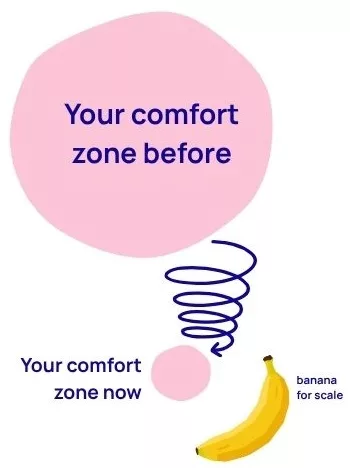
Then one day, you look around and realise your life feels… so much smaller than it used to.
You’re not going out as much.
You’ve drifted away from things you used to enjoy.
Life feels flatter, quieter, duller…
How did this happen?
And why does something designed to keep us safe end up making life so… lifeless?
To understand what’s going on, it helps to look at how the mind works.
Why the comfort zone feels so safe
In Solution Focused Hypnotherapy we often talk about two parts of the mind:
The Primitive Brain is focused on survival. Its job is to keep you safe, avoid risk, and conserve energy.
The Intellectual Mind, on the other hand, is the part of you that wants to grow, connect, explore, and do meaningful things.
—
Your comfort zone is largely dictated by your primitive brain. And from its perspective, anything unfamiliar (even something positive) can feel like a threat.
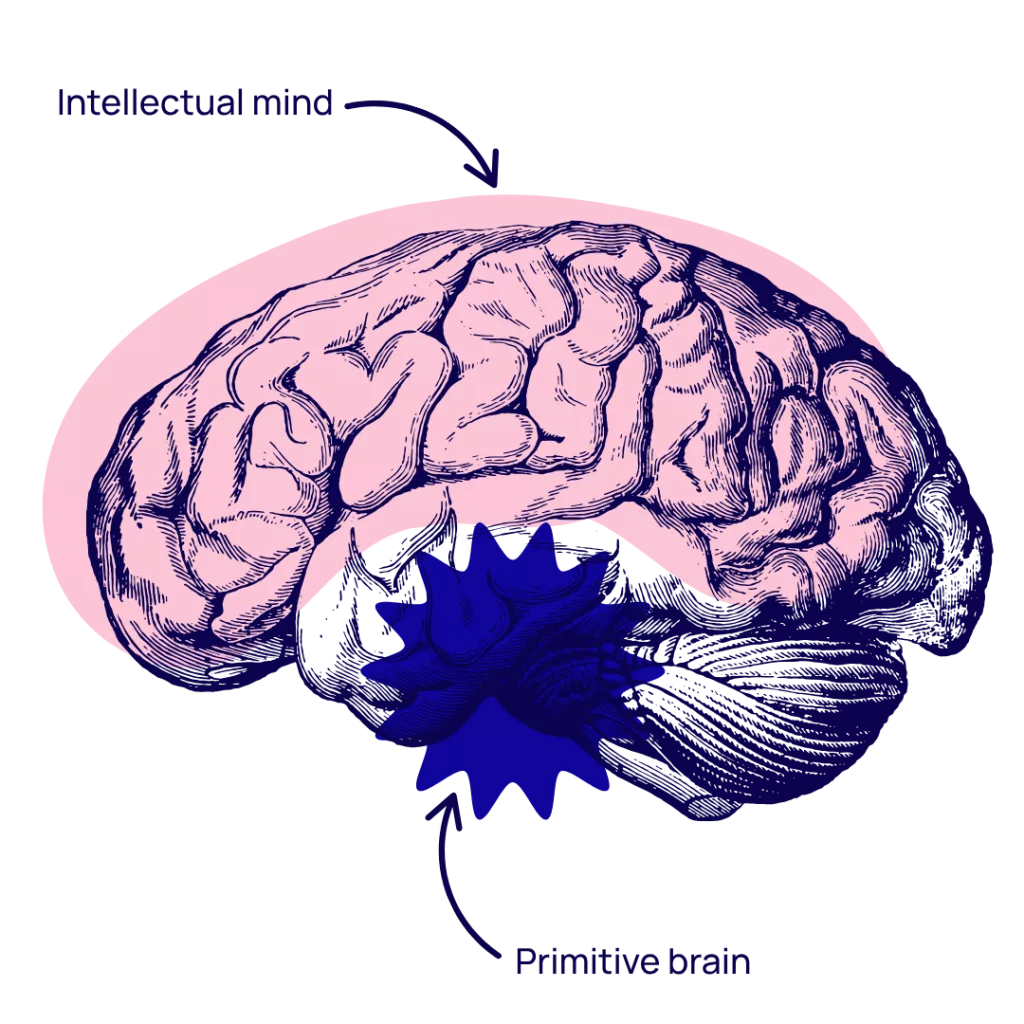
The primitive brain doesn’t distinguish very well between danger and discomfort. So, to be on the safe side, it will always encourage you to stay where things feel controlled and comfortable.
In real life, that can look like:
- turning down social invites
- staying at home more often
- giving up hobbies you once enjoyed
- seeing friends less
- avoiding new experiences
At first, these choices can feel like a relief. But over time, they reinforce the idea that the outside world is something to avoid. And gradually, your comfort zone begins to shrink.
The shrinking comfort zone
This is where many people get caught in a negative cycle:
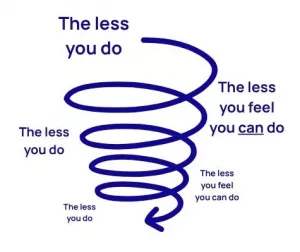
Things that once felt easy (meeting a friend, driving the car, even leaving the house) can start to feel overwhelming.
Not because you’ve changed in a fundamental way, but because your primitive brain is doing an exceedingly good job of keep you safe.
But to achieve that, it’s also keeping you small.
Why it matters
Over time, this negative cycle of fear and avoidance can start to have a wider impact.
It can gradually build into:
- increased anxiety
- a dip in mood
- loss of confidence or self-esteem
- behavioural avoidance patterns
- a growing sense that life is becoming more limited
- exacerbate fears, phobias, OCD
How to move from comfort to growth
To step outside your comfort zone, you don’t need to push yourself to breaking point. Instead, it’s possible to move forward in a way that feels both brave and kind.
This is where the idea of three zones can be helpful:
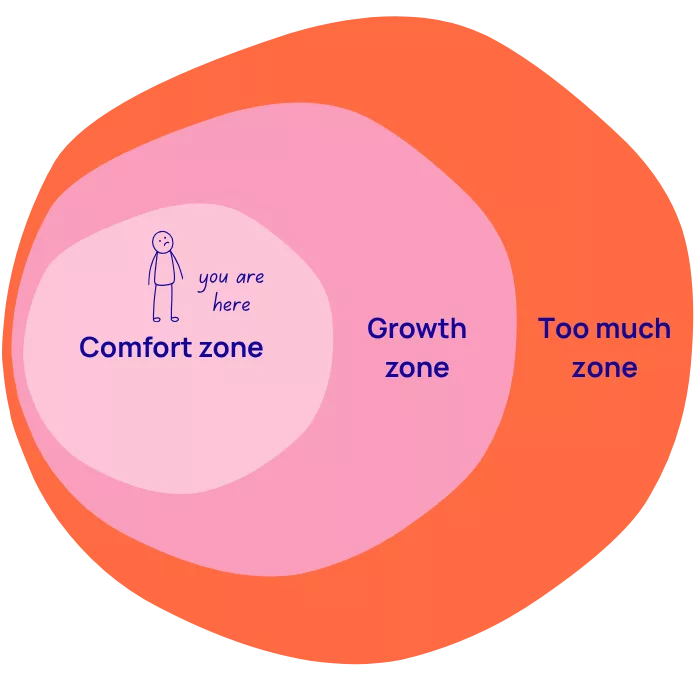
Comfort zone → familiar, safe, predictable
Growth zone → slightly uncomfortable, primitive brain might be on high alert, but still manageable
Too much zone → overwhelming, primitive brain triggered
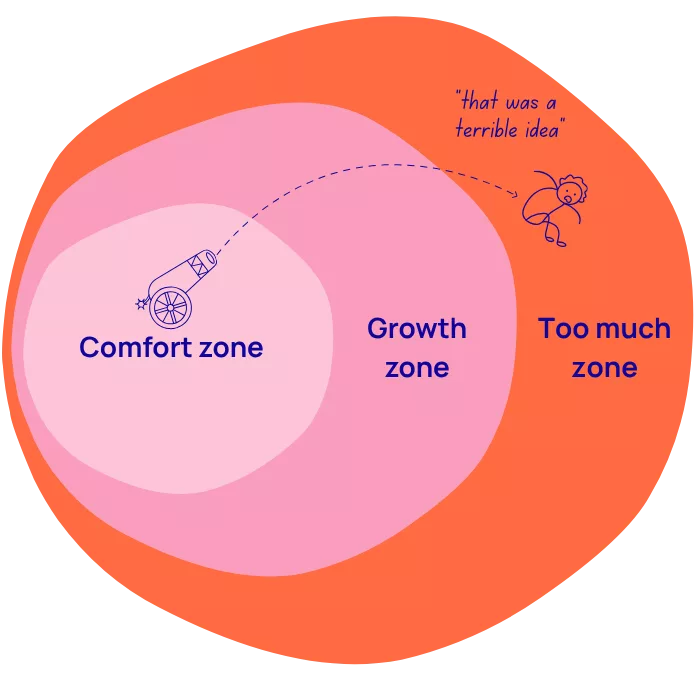
❌ If you overshoot into the “too much” zone, that can feel overwhelming and actually make it harder to stay engaged.
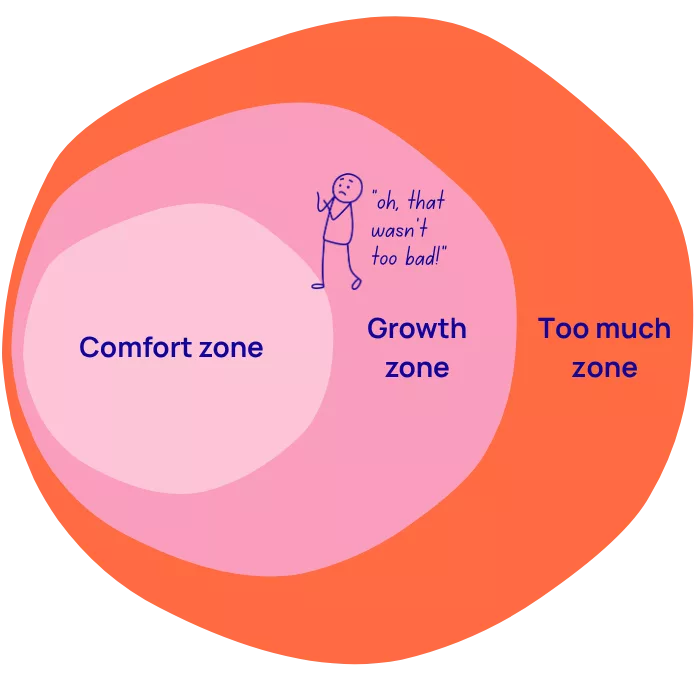
✅ But if you take small, steady steps into the “growth zone”, your system can cope without pushing back too hard. And because the steps are manageable, you can repeat them, build on them, and keep moving forward.
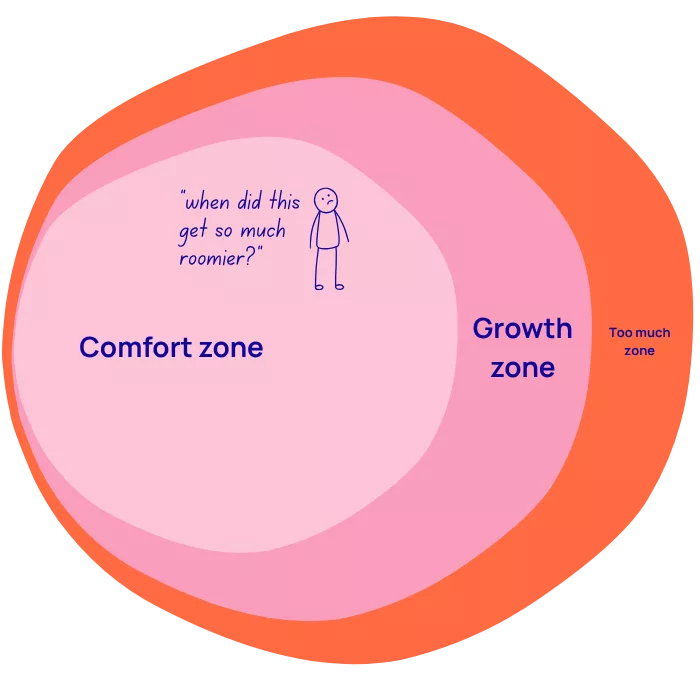
Each small step into the growth zone gently stretches what feels familiar.
Little by little, your comfort zone expands. The things that once felt like a stretch start to feel easier, more natural.
Until one day, you might notice that what used to be in your “growth zone” now fits completely within your comfort zone.
A gentle word of warning
When you begin taking steps outside your comfort zone, even small ones, it’s very common for your primitive brain to start piping up.
You might notice thoughts like:
“You can’t do this.”
“You’ll make a fool of yourself.”
“Maybe just leave it for tomorrow?”
This is your primitive brain is doing its job: trying to keep you safe by steering you back towards the familiar.
That’s why starting small matters so much. It might look like:
- calling the gym and booking an orientation, just to see if you like it
- emailing to ask what that class is like for beginners
- walking to that new café and just having a takeaway instead of sitting in
- watching a video of the activity you’d like to try to get a feel for it
- saying yes to something and giving yourself permission to leave any time
- saying “I’ll think about it” instead of an automatic no
When the step is manageable, your intellectual mind has the space to step in and respond to that primitive brain:
I hear you. I know this feels a bit uncomfortable. But we’re OK, we’re safe, and we can do this.
And your comfort zone begins to expand again.
Facing discomfort (and why it’s worth it)
Stepping outside your comfort zone does involve discomfort. That’s unavoidable. But it’s important to remember:
Discomfort is temporary.
Staying stuck can last much longer.
On the other side of that discomfort is often:
- renewed confidence
- stronger connections
- a sense of hope and possibility
And ultimately, a feeling of getting back to the life you want.
When to seek support (and how I can help)
If you’re finding that your comfort zone has become smaller over time, you don’t have to figure this out on your own.
Sometimes, despite our best intentions, the primitive brain can become a little too good at keeping us safe, making it harder to take those steps back into the world – even when we want to.
In Solution Focused Hypnotherapy, we work with the way the mind naturally responds to safety and change. By helping your primitive brain feel calmer and more secure, it no longer needs to hold you back in the same way.
That often makes it feel much easier to begin stepping into your growth zone: gently, gradually, and without overwhelm.
If you’re curious about how this might work for you, you’re very welcome to get in touch or book a free consultation.